Is Changing How We Dine — And Not Everyone Is Happy About It
Let me ask you something that might hit a little close to home.
When was the last time you actually lingered over dinner?
Not the kind of dinner where you’re watching the clock, waving your card at the server, or suddenly aware that the staff is circling your table like they’ve got somewhere better to be. I mean a real, unhurried, sit-all-the-way-through-dessert-and-then-some kind of dinner.
If you’ve been dining out in Raleigh lately, that experience might be getting harder to come by.
The 90-minute reservation time limit is here. It’s spreading. And it is quietly — and sometimes not so quietly — reshaping the dining culture of one of the South’s most exciting food cities.
What’s Actually Happening: The 90-Minute Reservation Trend Explained
Here’s the honest situation, and you deserve to know it straight.
During the pandemic, more restaurants placed time limits on tables — often to comply with government safety guidelines that encouraged restaurants to stagger and limit dining times to minimize the number of customers inside at any given moment. Gold Radio Reasonable enough, right? Nobody was arguing with that logic in 2020.
But here’s the thing — the pandemic ended. The time limits didn’t.
The reservation time limit trend originally began during the early stages of post-COVID-19 reopening, as restaurants sought to space out parties and prevent crowded waiting areas. But as diners have filled back in, timed dining has actually become more popular — not less. Facebook
In Raleigh, that shift is playing out in real time. Restaurants like Hummingbird, Figulina, and Mulino have all incorporated timed reservation windows into their booking systems — some explicitly, some more quietly. And for Raleigh diners who see a night out as both a splurge and a reset, the friction is real.
“If a restaurant tells me I’ve only got 90 minutes to eat and enjoy my dinner, I’m already out,” one local told Raleigh Magazine. “Hard pass.”
The Business Case: Why Restaurants Are Doing This
Okay — before you write off every restaurant that caps your table time, let’s actually understand why this is happening. Because honestly? The economics are brutal right now, and they matter.
The math behind restaurant table turnover is simple and unforgiving. Fewer seats, tighter margins, and skyrocketing costs for labor, food, and rent mean that every table has to work harder than it used to. With tables often spaced further apart and fewer covers per service, time limits help ensure tables turn, reservations hold, and revenue stays predictable — especially during peak hours when demand is high. Gold Radio
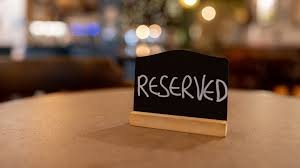
And technology has made the whole thing frictionless to implement. Platforms like OpenTable and Resy have normalized time-capped dining by making it easy for restaurants to set diner expectations at the point of booking — no awkward phone conversation required. You see it right there in your confirmation: “Table reserved for 1 hour 30 minutes.”
According to OpenTable’s vice president of product management, simple communication and expectation-setting are key — and restaurants that clearly communicate time limits ahead of time tend to have far fewer issues with diners during service. Gold Radio
That tracks. The surprise is what stings. The policy itself? A lot of people can live with it, if they know it upfront.
How Raleigh Restaurants Are Handling It
Not every Raleigh restaurant is applying the 90-minute window the same way — and the nuances actually matter quite a bit for your experience as a diner.
Hummingbird, for instance, uses Resy to set 90 minutes for two-tops, adding 15 extra minutes for each additional guest in the party. “If we can move the next reservation to another table, we will,” says Hummingbird’s Erin Barrett. If that’s not possible, she says, they’ll regretfully offer guests the option to continue at the bar.
Figulina takes a slightly more generous approach — allowing 105 minutes for parties of three or less, with an extra 30 minutes tacked on for larger groups. Mulino is more flexible still, listing a recommended 90-minute window on its site rather than a hard cap.
But even with that variability, some spots are operating on an unspoken clock — and that’s where the experience starts to feel off. At a recent dinner at Mala Pata, one diner described their table being cleared the moment dessert ended — waters included. No warning. No warmth. Just a cleared table.
“It’s not a perfect system,” acknowledges Barrett. She notes that most of the time, the time cap isn’t an issue at all. But one recent guest left a bad review saying they were “kicked out of the restaurant” — which, she’s clear, is never the intent. “We had a two-top for brunch that stayed through dinner,” she says. “They were comfortable, declined a table change — we just refreshed their water and reset the table.”
That’s hospitality-minded handling. Not every restaurant gets it that right.
The Diner Pushback: Why Raleigh Locals Are Feeling the Pinch
Here’s where the story gets personal — and honestly, this is the part that resonates most.
In full-service dining, 64% of customers say they care more about the experience than the price tag. They aren’t just buying dinner — they’re buying a night out. Celebrity Net Worth
And that’s exactly what makes the 90-minute dining window feel so jarring for a growing number of Raleigh diners.
“After grinding through a full workweek, managing a house and kids, that rare night out with my husband isn’t just ‘dinner,'” one local told Raleigh Magazine. “That’s my time to breathe. I’m not showing up to watch the clock, rush through courses or feel like I’m being politely pushed out the door.”
She’s not alone — not even close. The tension between restaurant operational efficiency and genuine dining experience is the fault line running right through this conversation. “I want to sit, talk, laugh, linger and actually enjoy the experience,” she adds. “That’s the whole point. Dining out should feel like a break — not a timed event.”
And when dinner for two in Raleigh can rival a tank of gas to the coast? That expectation of an unhurried experience feels more than justified.
A Step-by-Step Guide: How to Dine Well Under a Time Cap
Here’s the practical reality — time-limited reservations aren’t going away anytime soon. So rather than fight it, let me give you the playbook for making the most of a capped table.
Step 1: Know Before You Go
Always check the reservation confirmation for any time limit language before you arrive. Platforms like OpenTable and Resy now display time caps directly in the booking flow. No surprises. No frustration.
Step 2: Arrive On Time — Without Exception
The time limit begins when your reservation begins — not when you arrive. So if you show up 10 minutes late, you now have 80 minutes to dine, not 90. Gold Radio That’s on you, not the restaurant. Protect your own time by honoring your booking.
Step 3: Order Strategically
If you’re dining with a time limit, order everything you want up front to avoid running out of time later. If your entrée takes 20 minutes to prepare and another 20 to savor, put it in at the same time as appetizers. JukeBugs Front-load your ordering. Back-load your conversation.
Step 4: Choose Your Reservation Slot Wisely
If your goal is a slow, extended meal, avoid popular high-traffic restaurants, avoid weekends, and avoid the 7–9 PM prime dinnertime slot. JukeBugs An off-peak Tuesday reservation at 6 PM is a fundamentally different experience than Saturday at 7:30.
Step 5: Ask Your Server Directly
Not sure whether your table is on a clock? Just ask. When in doubt, ask your server if they need the table back — they’ll tell you what’s up. And being kind and understanding to the wait staff is always going to work in your favor for securing a better overall experience. JukeBugs
Step 6: Consider the Bar
Most Raleigh restaurants with timed dining rooms operate bar seating on a walk-in, open-ended basis. If lingering is the priority, the bar is often where you actually want to be — no clock, no pressure.
The Bigger Question: What Is Dining Out For Anymore?
Let’s sit with this for a second — because it’s actually the most important question in this whole conversation.
What is dining out for?
In a time when what you drop on dinner for two can rival a tank of gas to the coast, the expectation isn’t just good food. It’s the experience. The chance to sit, settle in, and stay awhile.
Time limits don’t just protect a business’s bottom line — they’re also a practical logistical move for protecting the quality of other patrons’ dining experiences. If you’ve arrived for a 9 PM reservation, but the 7 PM party is still at your table with a leisurely dessert course in mind, that’s going to prevent you from being seated and throw off the entire evening. Facebook
Fair point. The table turnover argument isn’t cynical — it’s genuinely about keeping the whole system functional for everyone.
But here’s what the best Raleigh restaurants understand: the how matters as much as the what. A 90-minute cap communicated warmly, managed graciously, and enforced with genuine hospitality is a very different experience from a cleared table and removed water glasses the moment the check arrives.
The friction in Raleigh’s dining scene right now isn’t really about 90 minutes. It’s about whether guests feel welcomed or processed. And that’s a hospitality question — not a math question.
Final Thoughts: The 90-Minute Rez Is Here to Stay — So Let’s Get Smarter About It
Here’s the bottom line.
Restaurant time limits in Raleigh are real, they’re spreading, and they reflect the genuine economic pressures that every independent restaurant owner is navigating right now. The math doesn’t lie. The margins are tight. The need to maximize table turns is not a villain’s move — it’s survival.
But so is the diner’s expectation of an experience that justifies the cost. Both things are true at the same time.
The restaurants getting this right — like Hummingbird, with its flexible, guest-first approach to the 90-minute window — are the ones treating the time cap as a logistical tool, not a hospitality substitute. The ones getting it wrong are the ones who forget that the clock is their operational necessity, not the guest’s problem to absorb.
For you, as a Raleigh diner navigating this new reality? Know your reservation terms. Arrive on time. Order smart. Pick your spots and your slots thoughtfully.
And if 90 minutes genuinely isn’t enough for the kind of evening you want to have — vote with your feet. There are still tables in this city that will let you stay awhile.
Go find them.