Let me be straight with you right from the start.
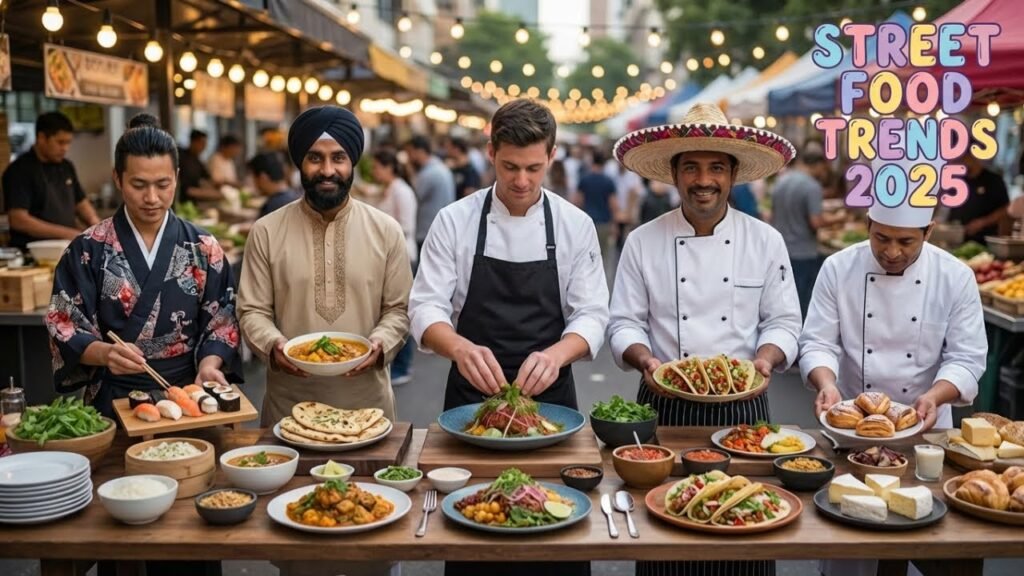
Street food isn’t just something you eat at a market stall on a sweaty Saturday afternoon. It’s a language. It’s the way millions of people around the world say “this is who I are,” “this is where I come from,” and “this is what love tastes like” — all in a single bite.
And in 2025? That language is having its loudest, most delicious moment yet.
Whether you’re a home cook craving culinary adventure without a plane ticket, or a food lover who genuinely gets excited at the mention of kimchi tacos and ramen with smoked mackerel broth — this article was written for you.
Let’s go on a ride.
What Is Street Food Culture — And Why Should You Actually Care?
Here’s the thing that most food blogs won’t tell you about street food culture: it’s never really been about the food alone.
It’s about people. It’s about the grandmother in Manila pressing rice flour through her fingers at 5 AM. The taco vendor in Mexico City whose family recipe hasn’t changed in three generations. The noodle stall owner in Bangkok who’s been feeding that same corner of the city for forty years.
Street food is the most democratic form of cooking on the planet — and right now, it’s having a full-blown global renaissance.
The street vendor industry in the U.S. alone is projected to reach a staggering $3.9 billion, growing at a compound annual growth rate of 12.3%. Globally, 1 in 4 consumers report having eaten street food in the past year, with the top drivers being enjoyment, experience, value for money, and a genuinely positive experience.
In other words — people aren’t just hungry. They’re seeking something. And street food is delivering it.
The Biggest Street Food Trend of 2025: Street Food Couture
Alright, let’s talk about the trend that’s genuinely reshaping the entire food world this year — and it has a name that sounds almost impossibly cool.
Street Food Couture.
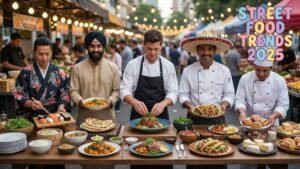
Street Food Couture is not just about making street food appealing to a wider audience — it’s about perfecting it. It uses gourmet ingredients, incorporates creativity, and employs sophisticated techniques. Think tacos with artisanal fillings, satay with prime meat, and ramen with smoked mackerel broth.
Street Food Couture is among four emerging global trends highlighted in the Future Menus 2025 report compiled by Unilever Food Solutions — one of the most credible food industry forecasting reports in the world. And honestly? Once you understand it, you’ll start seeing it everywhere.
It’s the fusion of the casual and the elevated. The humble and the haute. Chefs are elevating everyday dishes — tacos, dumplings, skewers — by using high-quality ingredients, inventive presentations, and refined techniques, bridging casual and fine dining while maintaining authentic roots.
And here’s the beautiful part for you as a home cook: you can do this at home. Right in your own kitchen. Tonight.
Global Street Food Flavors You Need to Know Right Now
Let me walk you through the world’s most exciting street food cultures that are dominating plates, feeds, and home kitchens in 2025. Each one is a doorway into a culinary universe you’ll want to explore — and recreate.
🌮 Mexican Street Food: Beyond the Basic Taco
You already love tacos. But do you know elote? Tlayudas? Esquites? Mexican street food is far richer and more layered than the average taco Tuesday would suggest.
Mexican elote is fast becoming an American county fair staple — a prime example of local street food specialties gaining an international audience through global crossover. For home cooks, elote — corn on the cob slathered in mayo, cotija cheese, chili powder, and lime — is one of the simplest, most crowd-pleasing things you can make at home. It takes 10 minutes and costs almost nothing.
🍢 Filipino Street Food: The Sleeping Giant of Global Cuisine
This one deserves your full attention right now — because the rest of the world is just waking up to what Filipinos have always known.
The rise of Filipino street food on the global stage has been fueled by its unique blend of sweet, savory, and tangy flavors. From grilled skewers to rich rice cakes, Filipino street food is making waves among those seeking indulgent yet affordable meals — representing a fusion of indigenous, Spanish, Chinese, and American influences.
Lumpia — the Filipino spring roll — is a perfect starting point for home cooks. Crispy, flavorful, endlessly customizable, and absolutely irresistible. If you haven’t made it yet, that changes this weekend.
🥟 Korean Street Food: The Culture That TikTok Built
Let’s be honest — Korean street food has had a massive global moment, and TikTok had everything to do with it.
TikTok has become a primary driver for street food trends, influencing what people eat and where they eat it — with viral sensations demonstrating the platform’s power to create massive demand and shape restaurant strategies globally.
Tteokbokki (spicy rice cakes), hotteok (sweet filled pancakes), and Korean corn dogs stuffed with mozzarella have all gone viral for a reason — they are genuinely incredible. And all of them are achievable in a home kitchen with ingredients you can find at most Asian grocery stores.
🫓 Indian Street Food: A Universe of Flavor in Every Bite
If you really want to stretch your cooking skills and absolutely blow people’s minds at your next dinner party, Indian street food is your answer.
Pani puri, vada pav, chaat — these dishes are explosions of contrasting flavors: tangy, spicy, sweet, crunchy, and soft all at once. Indian cuisine is one of the rapidly emerging cuisines within the Street Food Couture trend, alongside Mexican, Korean, and Filipino. The global food world is paying attention. You should be too.
How to Bring Street Food Culture Into Your Home Kitchen: A Step-by-Step Guide
Here’s where I get genuinely excited. Because you don’t need a food truck, a market stall, or a ticket to Bangkok to experience authentic street food flavors. You just need a few smart moves in the kitchen.
Step 1: Start With One Culture at a Time
Don’t try to cook your way around the world in a single weekend. Pick one cuisine — say, Mexican or Filipino — and spend two to three weeks really getting to know it. Cook one dish, nail it, then move to the next. Depth beats breadth every time.
Step 2: Source Authentic Ingredients
This is non-negotiable. The difference between a good street food dish and a great one often comes down to the authenticity of the ingredients. Seek out your nearest Asian grocery store, Latin market, or Indian supermarket. The right chili paste, the right fish sauce, the right masa flour — they matter enormously.
Step 3: Master the Technique, Not Just the Recipe
Real street food mastery is about understanding why something works — not just following steps. Why does the taco al pastor need to be sliced thin? Why does the pani puri shell need to be hollow? Ask these questions. Watch YouTube videos from actual street vendors. Serious Eats and Bon Appétit have excellent technique deep-dives worth bookmarking.
Step 4: Embrace the Street Food Couture Upgrade
Once you’ve got the base recipe locked down, elevate it. Swap standard ground beef in your tacos for slow-braised short rib. Use house-made chili oil in your dumplings instead of store-bought. Add a drizzle of truffle oil to your elote. Street Food Couture is about incorporating gourmet ingredients and sophisticated techniques into humble classics — and that’s something any home cook can do.
Step 5: Present It Like It Matters — Because It Does
Street food eaten at a stall has atmosphere built in. At home, you create that atmosphere yourself. Use the right serving vessels — bamboo skewers for satay, small clay bowls for chaat, wax paper wrapping for tacos. Light a candle. Put on a playlist. Make the experience, not just the meal.
Step 6: Share It and Build Community
The truest expression of street food culture has always been communal. Cook for friends. Host a street food night where every dish comes from a different country. Share your results on social media. The demand for at-home culinary experiences is growing robustly, with consumers showing a genuine interest in creating and serving street food-inspired dishes in their own homes. You’re not alone in this obsession — lean into the community.
Why Street Food Is the Most Sustainable Way to Cook in 2025
Here’s an angle that might surprise you — but it’s genuinely important.
Sustainable street food cooking isn’t a trend. It’s a return to how this food was always made.
In 2025, street food vendors are increasingly adopting sustainable practices such as using biodegradable packaging, sourcing local ingredients, and minimizing food waste — with plant-based and zero-waste menus becoming increasingly popular.
As a home cook, you’re actually ahead of the curve here. When you make Filipino adobo, you’re using the whole chicken. When you make Mexican pozole, you’re using every part of the corn. When you make Korean kimchi, you’re fermenting vegetables that would otherwise go to waste.
Street food has always been the cuisine of ingenuity — of making extraordinary things from simple, local, affordable ingredients. 30% of global consumers say their dining choices are influenced by inflation, making street food’s budget-friendly, waste-conscious approach more relevant than ever.
Cook street food at home, and you’re doing something genuinely good — for your wallet, your table, and your planet.
The TikTok Effect: How Social Media Is Changing Street Food Culture Forever
Let me be real with you about something that’s both exciting and a little overwhelming.
Social media — particularly TikTok — has completely changed the pace at which global street food trends travel. What used to take decades to cross an ocean now takes about 48 hours and a well-lit video.
A single influencer video can generate over 120 million views, creating instant demand and widespread adoption of new food concepts practically overnight. The Dubai chocolate bar, Tanghulu (candied Chinese hawthorn), and Korean buldak noodles all became global obsessions through exactly this mechanism.
For you as a home cook and food lover, this means two things. First — there has never been a better time to discover new cuisines, because the internet will bring them right to you. Second — the best street food stories aren’t the viral ones. They’re the quiet, deep, generational ones that existed long before any algorithm noticed them.
Chase both. But cherish the second kind.
Final Thoughts: Street Food Culture Is the Greatest Culinary Adventure You Can Have Without Leaving Home
Let me leave you with this.
The world is enormous. The flavors in it are staggering in their variety, their history, and their power to connect us to people and places we’ve never visited. And street food — messy, affordable, soulful, brilliant street food — is your most direct access point to all of it.
Street food takes many forms, from grab-and-go snacks to full meals, giving both explorers and home cooks a wide range of opportunities to discover the world through flavor.
You don’t need a Michelin star. You don’t need a professional kitchen. You need curiosity, a good pan, and the willingness to make a mess in the name of something delicious.
Start with one dish. Let it lead you somewhere unexpected.
The world is on your plate. All you have to do is cook it.